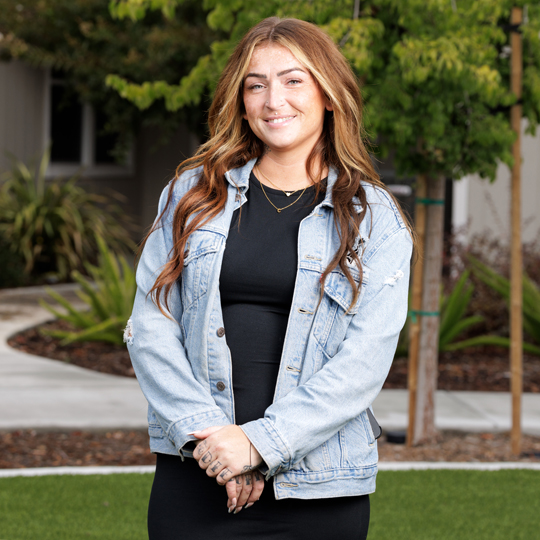
 When Andi moved from San Francisco to the quiet community of Fairfax, she carried with her a deep understanding of what it means to feel unheard. She first connected with Buckelew not as an employee, but as a client. Andi received Counseling services that not only provided personal support but also helped pave the way for her professional goals. Today, as a Hotline Counselor for Buckelew’s Suicide Prevention Program, she’s providing the very support she once received.
“I didn’t really have much help growing up,” Andi reflects. “I moved around a lot and lived in some not-too-nice places.” This personal experience of navigating difficult circumstances without adequate support, combined with a background in psychology studies at San Francisco State University, gives Andi a unique perspective that she brings to her work at Buckelew.
What strikes Andi most about her role isn’t the dramatic crisis calls; it’s the frequent callers who have found a lifeline in the anonymity and consistency of the hotline. “They consider us friends,” she explains. “They just want to be heard. Even if they’re not completely alone, the people around them are not really hearing them out.”
This insight reveals a crucial gap that Buckelew’s hotline fills: providing non-judgmental, anonymous support for people seeking connection. For many callers, these aren’t just one-time crisis interventions; they’re ongoing relationships that demonstrate the profound impact of consistent, compassionate care.
Perhaps most importantly, Andi is working to dismantle harmful stigmas about mental health support. She’s particularly concerned about those experiencing emotional numbness – what she calls “the highest risk” callers who often don’t reach out because they don’t feel “bad enough.”
“People believe you need to be suicidal, screaming, crying,” she explains. “But I think a good time to call is when you’re just feeling nothing. That’s a huge warning sign.” Her advocacy extends beyond work hours—she regularly encourages friends and community members to use the hotline, emphasizing that no concern is too small.
While the growing number of hotline calls indicates the need in our community – with 23,277 calls answered this fiscal year – the true measure of success is simply being available. “All it takes is one person to say, ‘I’m here. What you’re feeling is valid,’” Andi shares. “Because they’ve been told their whole lie that they should just ‘get over it.’”
Through counselors like Andi, Buckelew is proving that effective mental health support requires more than clinical expertise; it requires empathy, consistency, and organizations that truly value both their staff and the people they serve.