The importance of a continuum of care | Meet Lisa

When Lisa’s son Ryan experienced a marijuana-induced psychotic episode in 2015 at 15.

When Lisa’s son Ryan experienced a marijuana-induced psychotic episode in 2015 at 15.
Ray’s difficult self-work is remarkable, says his mother,.
Buckelew Programs plays a key role in planning and leading the mobile inRESPONSE Mental Health Support.
Within days of giving birth to her youngest son at Marin General Hospital, Yuri watched her newborn
When Sabrina was in her early 40s, she felt herself sinking deeper and deeper.
Nick Rodin sits in his Petaluma Tattoo shop and pushes up his sleeve to expose the least ornate tattoo on his otherwise art-filled arm.
Eugene Hay remembers running from the police as fast as he could.
He was 18 and brought up on the streets of Oakland, where he dabbled in drug use, sales, and theft. This wasn’t his first encounter with the police, and it wouldn’t be his last.
On this day in 1970, Eugene couldn’t outrun the cops or their bullet that pierced the base of his skull and traveled clean through his right cheek. It shattered the jaw bone but miraculously didn’t cause critical brain damage. Eugene’s jaw was still wired shut when the courts sent him to prison for a year.
But that wasn’t the rock bottom you’d imagine for Eugene. While in jail, he took codeine for pain and grew to love it. When he was released, he sought more opiates – especially heroin.
It wasn’t hard to find in the early 1970s. Sophisticated drug rings were beginning to rule Oakland’s streets, fed by a flow of heroin from Southeast Asia and generating millions of dollars. For many of the community’s youth, seeing young drug kingpins in furs, jewelry, and fancy cars was awe-inspiring.
“It was a time when Black people started to control our drug market,” Eugene remembers. “One of my friends was the Hong Kong connection. We had extremely good drugs, and it was extremely lucrative.”
But, as Eugene likes to say, he wasn’t a very good felon. He was busted for drug sales within a year of being released from jail. This time he was given a choice: Go to drug rehab or face five years to life in prison if convicted.
The choice he made – rehab – altered his life trajectory forever and gave him a gift he has since passed to hundreds of addicts over the next five decades.
Today, Eugene is a certified substance use counselor at the Helen Vine Recovery Center, Buckelew’s 30-bed residential detox and substance use treatment program in San Rafael. Helen Vine provides a solid start to recovery for people with drug or alcohol problems, including those with co-occurring mental illnesses.
“At first, I got into counseling to make up for some of the harm I did,” Eugene says. “But the reality is I can’t. I’ve come to a spiritual place, and now I keep doing this work because God has equipped me to be helpful to other people.”
Peer providers like Eugene play a crucial role in Buckelew’s treatment and recovery programs. With their unique perspective and ability to empathize with those in treatment, peer specialists offer invaluable guidance by sharing their lived experiences. They also are proof that addiction recovery is possible.
Eugene’s recovery began at a men’s facility in Marin County called Center Point, where he learned many of the elemental lessons he still carries and shares with Helen Vine clients today.
“The most important lesson is about love,” he explains. “I encourage them to learn to love thyself so they can make better choices and love others.”
After graduating from Center Point, Eugene stayed on as a counselor and then became a court liaison and a program director. His long career also has included working at St. Anthony Farm (a residential recovery program near Petaluma), training new recovery coaches, and reviewing state-funded treatment programs across California.
In the early days, he also joined a group of young men who visited Bay Area high schools and gave “scared straight” types of talks.
“This was the time when all the big dealers were coming out of the Oakland market, and I was letting these kids know it wasn’t all glitz and glory. A lot of people die,” Eugene says. “When I was their age, I had no idea that at least half the guys I came up with was gonna get killed. There’s always more to what it appears. Like, I ended up having severe PTSD. I have bullet wounds not just from the police but also in both arms, my stomach, and back (from street shootings).”
Eugene joined Helen Vine about four years ago. When asked about the key to the program’s success, his answer is simple: “We care. And we actually listen.”
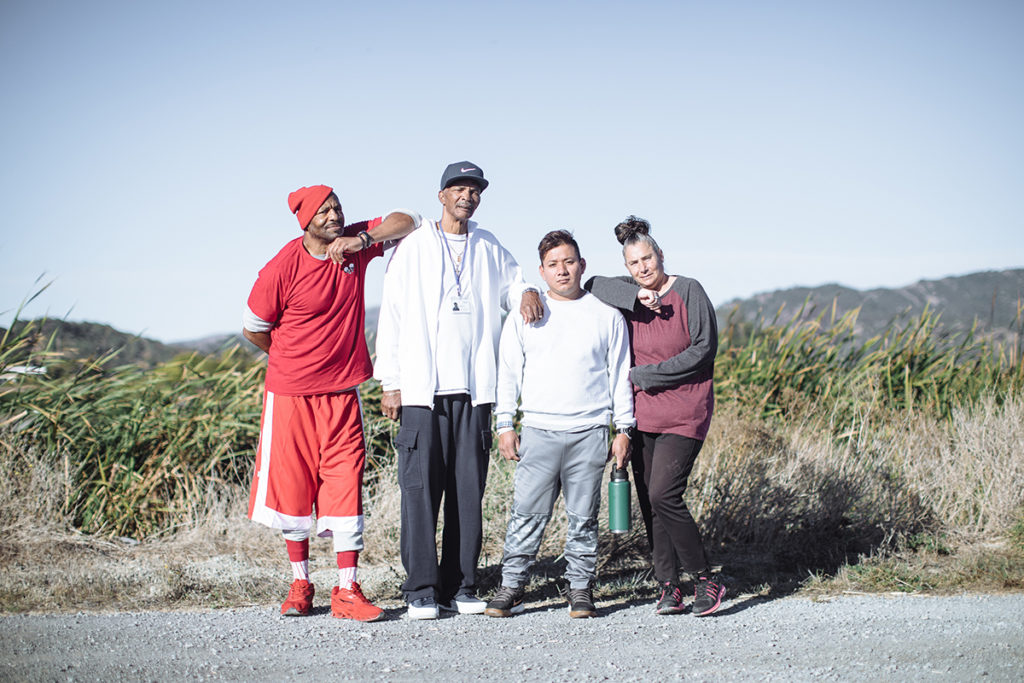
Eugene does his best listening – and the clients do their best talking – when he takes them for walks around the nature preserve next to Helen Vine. Idyllic trails loop around wetlands that are home to herons, egrets, pelicans, and other wildlife.
“I know from experience that the clients can feel claustrophobic just being in this building all the time,” he says. “There’s energy in being outside and solitude that can be so peaceful. Also, when we’re walking, we’re talking. People are a lot more comfortable talking to you when you’re not in the office.”
With nearly 50 years of experience in the field, Eugene is a wealth of information about the evolution of street drugs, addict behaviors, and detox programs. He’s seen what works and what doesn’t. And one of the things that works best, he says, is taking his ego out of the equation.
“I’m compassionate and stay calm no matter what the client does,” he explains. “I understand that the more damaged they are, the more they’re gonna act out. It has nothing to do with me.”
Eugene has seen dynamic changes over the years – types of substances, potency, and interventions. But what changed the most is the users themselves, he says.
“I think the clients are more damaged,” Eugene suggests. “There’s a lack of structure in their family systems where they were not raised with a basic foundation of two nurturing, healthy parents. Hardly any of these clients have that. Without that, you start life with a deficit.”
“Most of these folks have learned to survive in a way that’s guided by fear and selfishness. They have no discipline and no healthy attachments,” he continues. “I try to help them see that so they can learn how to live and enjoy life.”
Eugene, now in his 70s, could retire from recovery counseling. But he doesn’t. Why?
He answers matter-of-factly: “Because I enjoy what I do.”
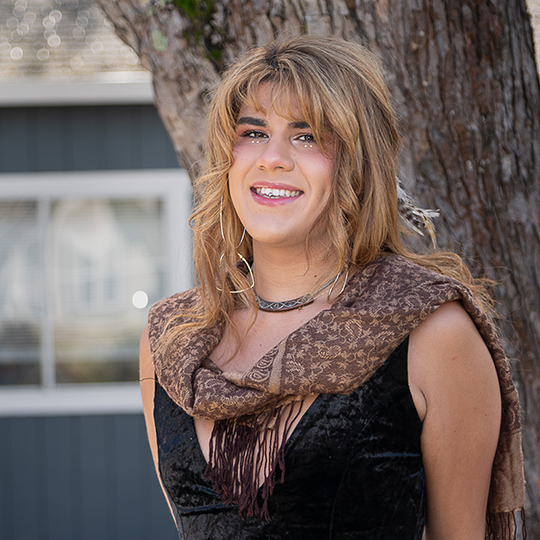
At Athena House, Lavender found a community of women who understood addiction and supported each other in healing.
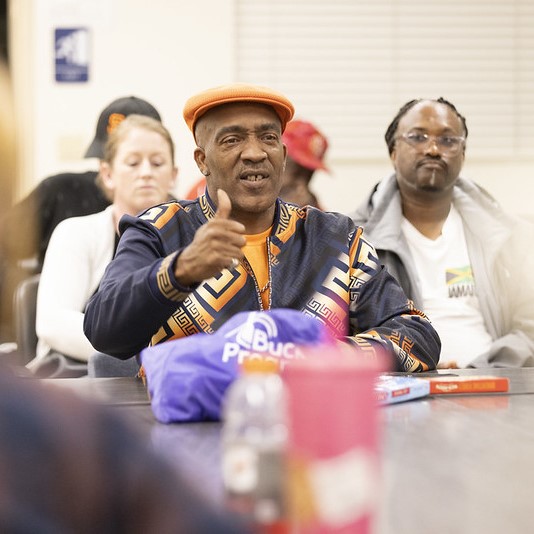
Shawn runs weekly meetings at Helen Vine Recovery Center.

Buckelew’s La Maternidad y Esperanza Program helped me during the most difficult time of my life. We were going through COVID when my daughter was
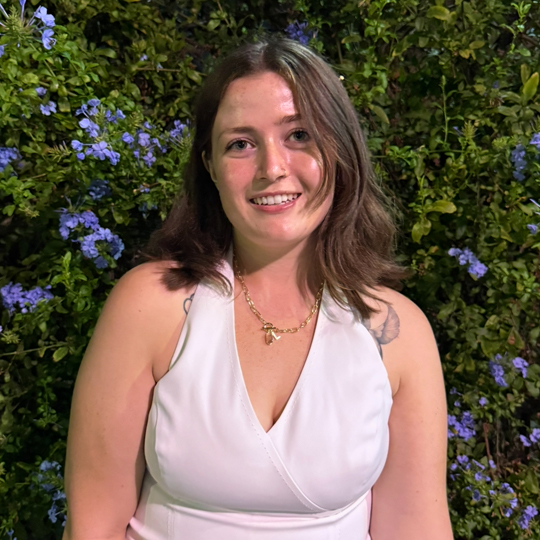
At seventeen, Lucy’s world felt overwhelming. A traumatic family event, combined with the pressures of high school and college applications, set her on a path
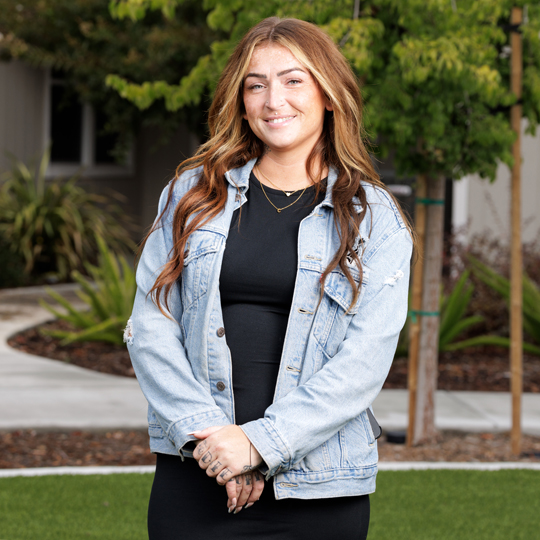
Growing up in the quiet town of Penngrove, Shelby appeared to have everything together. She was active in 4-H, cheerleading for her school, and loved
When Andi moved from San Francisco to the quiet community of Fairfax, she carried with her a deep understanding of what it means to feel
Two roads brought JD Schramm to Buckelew Programs in early 2022.