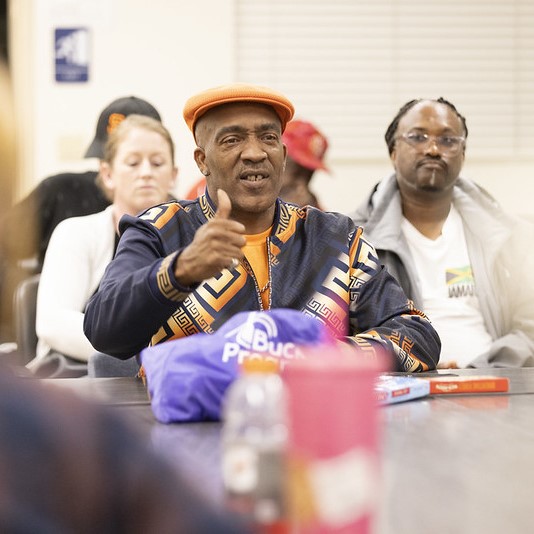
“This group is the one place where I can be me,” says Mateo*, a member of Buckelew’s Survivors of Suicide support group. “At work, I’m supporting community, presenting something I believe in, making connections. But in the group, I’m just me. I don’t have to explain this grief, because everyone there already knows how it feels.”
Mateo grew up in Colombia as one of four brothers. At seventeen, he moved to the U.S. while his oldest brother, Oscar*, remained in Colombia. Mateo remembers him as the gentlest person he knew, with a warm smile and great sense of humor. “Oscar would give you the shoes off his feet,” says Mateo. “That’s where I got my desire to serve, because of him.”
Life was busy for the brothers, who connected in person a handful of times over the years. Mateo says it was easy to take for granted that they would always see each other again. He fondly recalls the last lunch he shared with Oscar in Bogotá; the flavors of the soup mingling with great conversation and Oscar’s kind laughter. And then one day, he received a phone call that changed everything: Oscar had died by suicide.
Mateo was stunned, but immediately sprang into action. He drove to his father’s house to deliver the most difficult news a parent and sibling could share. Shortly after, he flew to Colombia for the funeral, where he felt the weight of stigma surrounding Oscar’s death. Mateo did what he had been taught to do: “You suck it up,” he says. “It’s cultural. You normalize it.”
For two and a half years, he kept a strong face at work and at home. He insisted that he was fine until one day, in the middle of a routine meeting, everything went blank. He was totally blindsided.
“It was just ‘lights out’,” says Mateo. “I was in a 3-hour meeting, and I don’t know what I said or if I made any sense. I was a mess.”
Mateo later learned he had experienced an anxiety attack. He immediately called his health provider and spent twenty minutes talking with a counselor. He left that appointment sure he had conquered his emotions. He was cured.
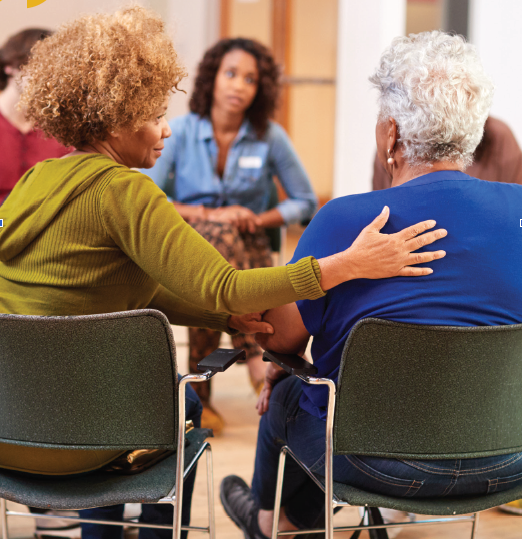
He wasn’t. In the years that followed, Mateo describes his life as a roller coaster of deep lows, brief recoveries, and plenty of self-blame. He eventually sought consistent professional support. This helped, but it wasn’t until he joined Buckelew’s Survivors Of Suicide support group that he felt truly understood. “I thought I was doing the work and I wasn’t neglecting it,” he says. “Then I went to the group, and I realized, not so much.”
More than ten years after his brother’s death, Mateo still attends group when he has time. For him, it has become his ‘reality check’; a reminder that grief is not something you finish. “Grief is ongoing. You have to keep tending to it.” His goal now is to catch himself before he reaches the bottom, and to keep choosing the days that bring him peace. “A peaceful day is a successful day,” he says.
In the SOS group, Mateo is often the only man in the room. This doesn’t surprise him. “As Latino men, we’re taught to put up with things; to live another day. Crying in public is taboo.” Mateo hopes to play a small role in changing this expectation. His own children, both daughters, have grown up talking freely about mental health, and he hopes that one day they will carry this open dialogue into their own families.
Mateo is sharing his story to open the conversation with the community, but he does have a particular type of person in mind. “I hope it reaches the person who thinks they have it handled,” he says. “Start small. Talk to someone you trust. What works for me may not work for you, so find your solution. But don’t do nothing, because that just keeps the fire burning.”
*Names changed for privacy
If you or someone you know is struggling, call or text 988 to reach the Suicide & Crisis Lifeline. To learn more about the Survivors of Suicide support group, visit Buckelew.org/services/suicide-prevention